One of the most common discussions in commercial aquaponics revolves around the concept of coupled vs decoupled aquaponics systems. The topic is often presented as though one approach is inherently better than the other, but after years of designing and operating commercial aquaponics systems, we’ve found that the reality is much more nuanced.
Both approaches have important advantages, and in many cases, the best commercial systems are designed to operate in both modes depending on the stage of production and the needs of the farm.
Understanding the differences and designing your system with flexibility in mind can make your operation more productive, more resilient, and easier to manage.
A Quick Review of Aquaponics
At its core, aquaponics combines aquaculture (raising fish) with hydroponics (growing plants without soil) in a recirculating water system.
Fish are fed a complete diet, producing nutrient-rich waste. Naturally occurring nitrifying bacteria convert that waste into plant-available nitrogen, primarily in the form of nitrate. The plants then absorb those nutrients while simultaneously helping filter and clean the water before it returns to the fish.
This continuous recycling of water allows growers to produce both protein and produce while dramatically reducing water consumption and eliminating the need to discharge nutrient-rich wastewater into the environment. Want to explore the basics further?
The Basics: Defining the Two System Designs
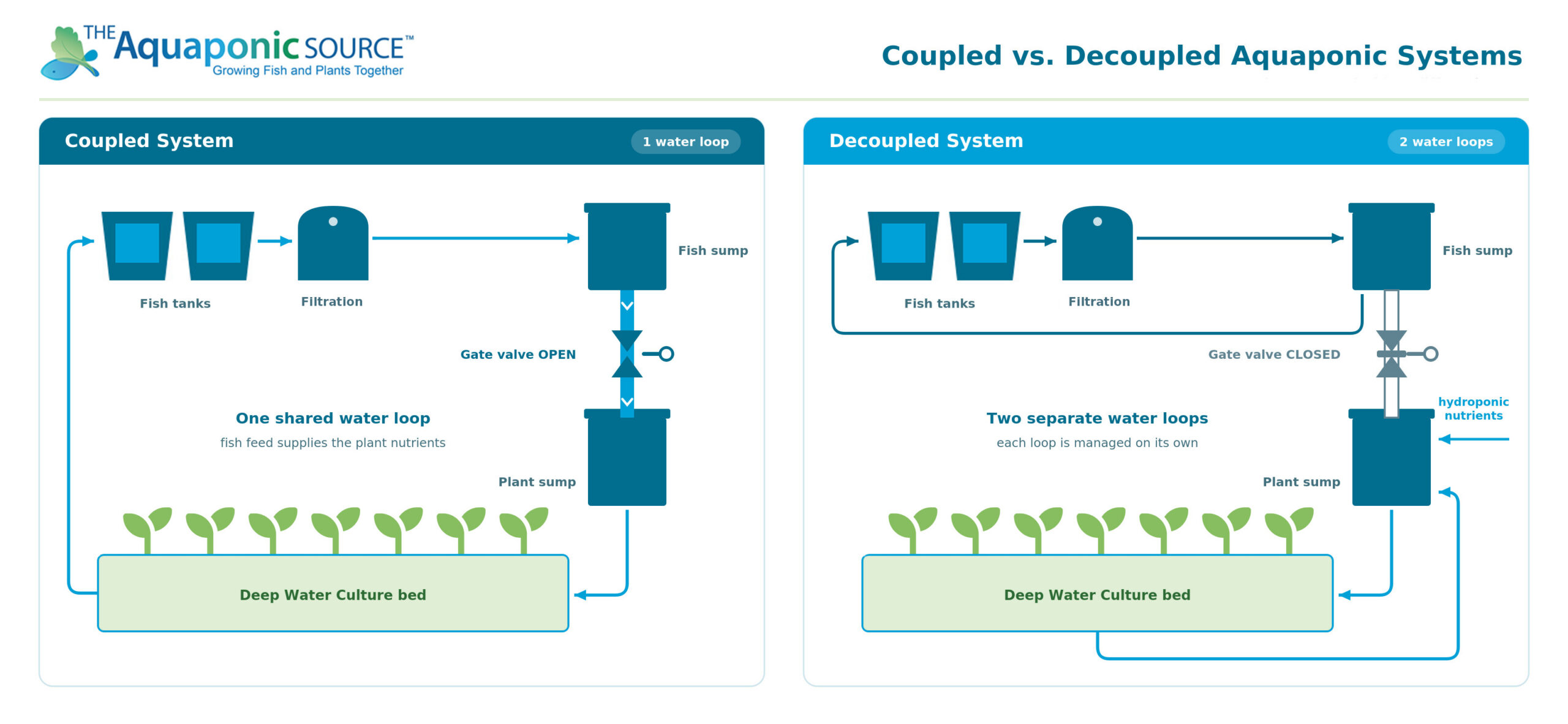
Although commercial farms include many supporting systems such as aeration, heating, oxygen generation, controls, and monitoring most aquaponics systems can be simplified into three major components:
- Fish Culture: The fish rearing tanks where aquatic animals are grown.
- Filtration: The mechanical and biological filtration systems that maintain water quality.
- Plant Production: The hydroponic growing system where plants utilize nutrients from the fish, including deep water culture systems or other hydroponic growing systems.
How these three components are connected determines whether the system is operating in a coupled or decoupled aquaponics system configuration.
What is a Coupled Aquaponics System?
In a fully coupled system, water continuously circulates through all three components.
Fish Tanks → Filtration → Plant Growing System → Back to the Fish
Everything operates as one complete recirculating loop. When designed properly, this arrangement is remarkably elegant.
As fish consume feed, nutrients are continually supplied to the plants. The plants help polish and filter the water before it returns to the fish, creating a stable biological ecosystem where every component benefits the others.
After operating our own commercial farm for many years and supporting numerous commercial growers across the country, we’ve found that coupled aquaponics systems perform exceptionally well when the system is properly balanced. (Explore our pre-designed aquaponics systems to see balanced single-loop designs).
The key assumption is that the fish population is consuming the target daily feed rate the system was designed around. Daily feed rate has been extensively researched and is one of the primary design metrics in commercial aquaponics. When fish are eating at their design feed rate, nutrient production closely matches plant demand, allowing the entire system to function naturally with very little intervention.
What is a Decoupled Aquaponics System?
In a decoupled aquaponics system, the fish and plants each operate on their own independent recirculating loops.
The fish system consists of:
- Fish tanks
- Mechanical filtration
- Biological filtration
- Aeration and oxygen systems
- Pumps and circulation
The hydroponic system has its own recirculating nutrient loop designed specifically for plant production.
Because the two systems are isolated, growers can supplement the plant system with hydroponic nutrients while allowing the fish population to mature independently. This allows commercial farms to begin producing and selling plants immediately while waiting for the fish to reach their intended production level.
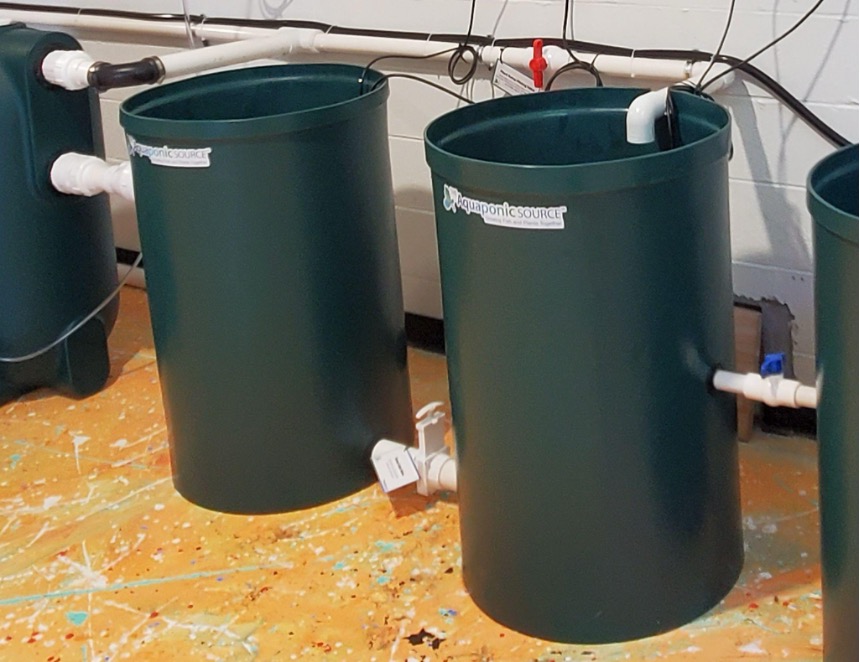
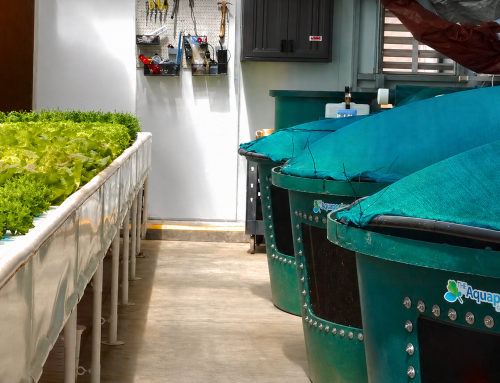
Example of a decoupled design. The fish and plant systems each have their own sump tank connected by a gate valve. When the gate valve is closed, the systems are decoupled. When the valve is open, both sumps are connected and share water. Fish water flows directly into the plant sump when the red valve above the sump is open.
3 Reasons to Choose a Decoupled Aquaponics System
If coupled systems work so well, why would anyone choose to separate the fish and plant systems? The answer is flexibility. Decoupling isn’t an alternative to aquaponics, it is a management strategy that gives growers more control during certain stages of production.
1. Startup: The Most Common Reason to Decouple
One of the biggest challenges for new commercial farms is that they rarely begin with enough mature fish to support full plant production.
Plants generate the majority of the farm’s revenue, but fish require time to grow. Purchasing enough large fish to immediately reach your target daily feed rate can be expensive, difficult, and risky. Most farms instead begin with smaller fingerlings that are easier and less expensive to transport.
The downside is that young fish simply don’t eat enough feed to provide sufficient nutrients for a commercial hydroponic crop. Without another strategy, growers would need to wait several months before producing marketable plants. Instead, many farms begin in a decoupled aquaponics configuration.
2. Designing for Decoupling and Risk Management
One of the most important design considerations is that the fish life support system must be capable of operating independently. Although plants certainly contribute to water quality in a coupled system, they should never be relied upon as part of the primary life support system if decoupling is part of the design strategy.
That means the fish system should be fully sized to handle:
- Biological filtration
- Mechanical solids removal
- Oxygen demand
- Water circulation
- Overall life support
In other words, if the plant system were disconnected tomorrow, the fish should continue to thrive with no reduction in water quality.
Decoupling can also be extremely valuable whenever something unexpected occurs in the fish system, such as:
- Disease outbreaks
- Significant fish mortality
- Large harvest events
- Major maintenance
- System modifications
Being able to isolate the fish system allows operators to focus on restoring fish health without disrupting plant production. Likewise, growers can continue producing and harvesting crops while taking the necessary time to stabilize the fish population before reconnecting the systems. This flexibility can significantly reduce financial risk during unforeseen events.
3. One-Way Nutrient Transfer and Practical Flexibility
Decoupling doesn’t always mean completely separating the systems. Many commercial farms operate somewhere in between.
One common strategy is to periodically transfer nutrient-rich fish water into the hydroponic system without returning that water back to the fish. Fresh water is then added to the fish system to replace the transferred volume. This creates a one-way movement of nutrients from fish to plants while maintaining independent control of each loop.
A Practical Example:
We frequently use this approach when incorporating Dutch bucket or AutoPot systems alongside Deep Water Culture. In these cases, nutrient-rich water from the fish system is periodically transferred into a dedicated nutrient reservoir. That reservoir supplies the Dutch buckets or AutoPots but does not return water to the fish.
Because the reservoir is independent, growers can fine-tune nutrient concentrations by adding calcium, magnesium, potassium, iron, or other crop-specific supplements without having to amend the entire volume of water in the aquaculture system. This level of control is especially valuable for fruiting crops such as:
- Tomatoes
- Peppers
- Cucumbers
- Other vine crops
These plants typically have nutritional demands that differ significantly from leafy greens grown in Deep Water Culture.
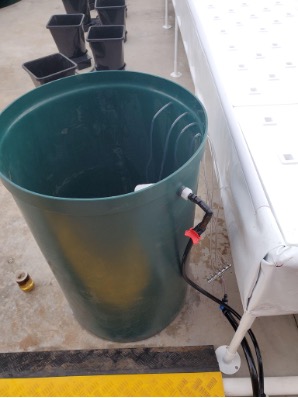
Here is an example of a nutrient reservoir that receives water from the fish system in a one-directional flow. This water can then be amended to support the nutrient requirements of the plants growing in the AutoPot buckets connected to the reservoir.
When Is It Time to Couple the Systems?
Once the fish population matures and reaches the target daily feed rate, it’s usually time to reconnect the systems. This is where aquaponics truly shines.
The majority of plant nutrients now originate naturally from fish feed rather than a hydroponic nutrient supplement like Espartan. The biological relationship between fish, bacteria, and plants becomes self-supporting, resulting in a stable ecosystem that is often easier to manage than operating two completely independent systems.
From our experience, and the experience of many commercial growers we work with, properly balanced coupled systems are generally the simplest and most stable way to operate a mature commercial aquaponics farm. They also reduce fertilizer costs considerably. Fish feed is substantially less expensive than purchasing complete hydroponic nutrient solutions, making the fish the primary engine driving plant production.
Even in a fully coupled system, however, most growers will continue supplementing a few nutrients that are commonly deficient in aquaponics, including:
- Calcium
- Potassium
- Iron
Fortunately, these supplements are relatively inexpensive and easy to manage compared to replacing the entire nutrient profile with commercial hydroponic fertilizers.
Making the Right Choice for Your Space
The discussion around coupled vs decoupled aquaponics shouldn’t be viewed as choosing one philosophy over another. Instead, they should be viewed as complementary tools.
- Decoupling provides flexibility during startup, improves risk management, and allows greater precision when growing specialty crops.
- Coupling allows the biological ecosystem to operate exactly as aquaponics was intended—using fish feed as the primary nutrient source while producing healthy fish and healthy plants within one efficient recirculating system.
In our experience, the best commercial aquaponics systems are designed with the ability to do both. They begin decoupled when it makes operational sense, transition to coupled operation once the fish population matures, and retain the flexibility to decouple again whenever production goals or management needs require it. Learn more in our online aquaponic farm courses or explore our full range of courses and training.
Let’s Build Your Custom Aquaponics System Together
Whether you are planning a commercial greenhouse or designing an educational facility, choosing the right system architecture from day one is critical to long-term success. Explore our services or contact our design team today to learn how we can help you build a flexible, resilient, and highly productive aquaponics farm.