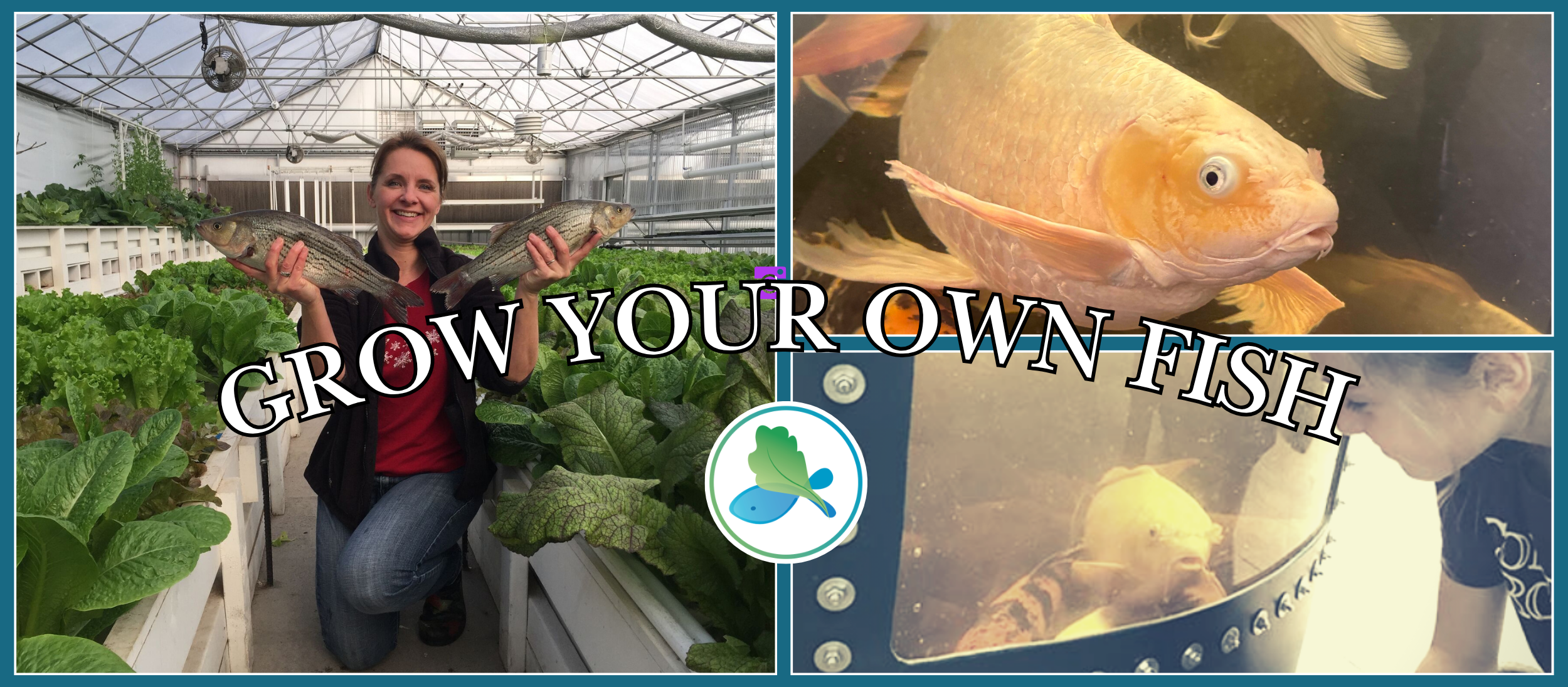
Whether you are looking to increase your family’s self-reliance or you’re a homesteader looking for a sustainable protein source, backyard fish farming is one of the most efficient ways to produce high-quality food in a small footprint. In an era where food supply chains are increasingly complex, the ability to harvest fresh, chemical-free protein from your own backyard is the ultimate form of food security.
But where do you start? From choosing the right species to understanding the technical needs of a recirculating system, this guide will walk you through the essentials of small-scale fish farming and show you how to graduate to a full, living ecosystem.

What is Backyard Fish Farming?
At its core, backyard fish farming (also known as small-scale aquaculture) is the practice of raising fish in a controlled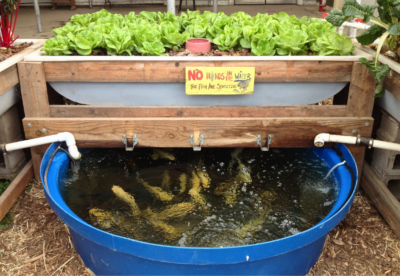 environment for food or hobby.
Unlike traditional pond farming, which often requires massive acreage and carries the risk of groundwater contamination or predator loss, most modern home aquaculture systems use a Recirculating Aquaculture System (RAS).
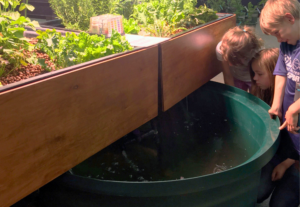
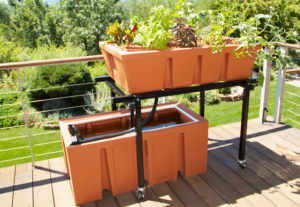
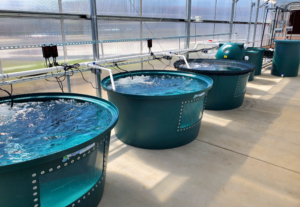
A RAS, like our Flourish Fish systems, is designed to filter and clean the water so it can be reused indefinitely. By utilizing proper aeration, tanks, pumps and filtration systems, you essentially create a tiny, self-contained eco-system. This technology makes it possible to grow fish in a remarkably small space, even a suburban backyard, a garage, or a small greenhouse.
5 Benefits of Backyard Fish Farming
If you are weighing the pros and cons of home food production, aquaculture offers several unique advantages over traditional livestock like chickens or goats.
1. Sustainable Protein Source
Fish have an incredible feed-conversion ratio (FCR). For example, raising tilapia at home requires roughly 1.5 pounds of feed to produce 1 pound of body mass. In comparison, cattle require 8-10 pounds of feed for the same output. This makes fish one of the most resource-efficient source of protein you can grow, providing a high return on your investment in feed and time. 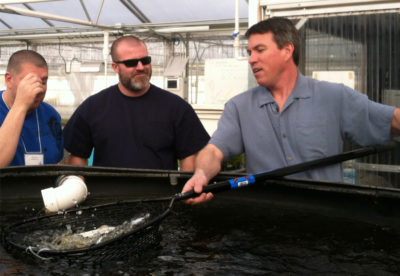
2. Water Efficiency & Conservation
Because the water in a RAS is filtered and recirculated, you can raise a lot of fish, and ultimately food, with less water. This is a massive benefit for our clients in drought-prone areas like California or the arid Southwest, where every gallon of water counts toward both the environment and the monthly bill.
3. Total Control Over Food Quality
Most store-bought fish are raised in crowded offshore pens, or raised overseas with poor food safety regulations. Fish can also be treated with antibiotics or synthetic dyes to change the color of the meat. When you manage your own backyard system, you can ensure a chemical-free source of protein. You know exactly what goes into the water, what the fish eat, and ultimately, what goes into your family’s bodies.
4. Year-Round Production in Any Climate
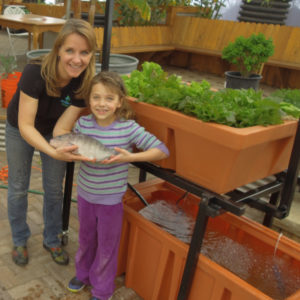 While a traditional garden dies off during the first frost, a fish farm can thrive regardless of the weather outside. With training from our fish health and management class, the right sized flourish fish farm, and a climate-controlled environment, you can harvest fresh fish in the middle of a Colorado winter or a humid Florida summer. This stability is key for those looking for a consistent, year-round food supply.
5. Hands-on Educational Value
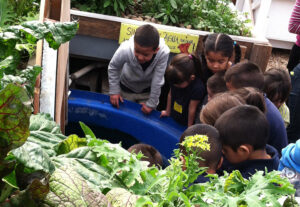
Aquaculture is a world-class living laboratory. It is one of the top reasons why school aquaponics systems are exploding in popularity across the country. It teaches biology, chemistry, and environmental stewardship in a hands-on way that keeps students (and kids at home) engaged. There is no better way to learn about the nitrogen cycle than by seeing it in action in your own backyard.
How to Get Started With a Backyard Fish Farm
Success in aquaculture doesn’t happen by accident; it happens by design. Before you buy your first fingerlings, you need to address these three pillars of system setup to ensure your fish don’t just survive, but thrive.
Know Your Fish Species
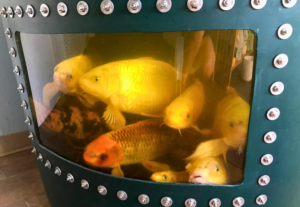
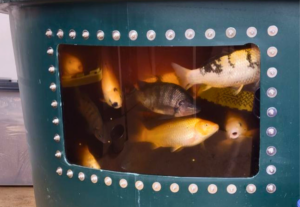
Selecting the right fish depends on your local regulations, climate and your specific water temperature goals. Tilapia remains the most popular choice for beginners because they are incredibly hardy and grow to harvest size quickly. However, if you live in a cooler region and don’t want to invest heavily in water heaters, Yellow Perch or Bluegill are fantastic, delicious alternatives. For those more interested in the aesthetic pretty pond vibe, Koi and Goldfish are excellent nutrient-producers, though they aren’t typically raised for the dinner table in the U.S. Cooler water species such as Trout or Hybrid Striped Bass or great choices for more experienced fish farmers.
Essential Equipment and Layout
You don’t need a massive lake,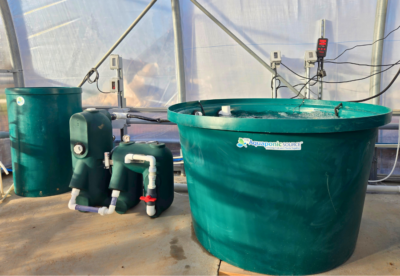 but you do need the right gear. A basic setup includes a high-density polyethylene (HDPE) tank—which is food-safe and durable—along with a dedicated water pump and an aeration system. Aeration is non-negotiable; fish need dissolved oxygen to breathe, especially in high-density tanks. Furthermore, your filtration unit must be sized correctly for the amount of fish you plan to keep. Skimping on the pump or the filter is the single most common reason beginner systems fail.
Get the Right Design from the Right Team
Many people start with a DIY barrel or a plastic tub, only to realize the plumbing and waste management are a nightmare. This is where our standardized customization comes in. By using a pre-engineered system, you ensure that the flow rates, oxygen levels, and filtration capacity are perfectly balanced from day one. Our team specializes in taking the guesswork out of the engineering so you can focus on the farming.
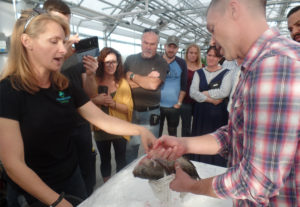
Why Take Your Fish Farm (Aquaculture) to the Next Step (Aquaponics)?
While raising fish alone is rewarding, standalone aquaculture has one major waste product: nutrient-rich water. In a standard fish farm, you eventually have to discharge a portion of this water to prevent nitrate levels from climbing too high.
This is where the magic happens.
By upgrading to a full aquaponics home system, you use that waste as the perfect organic fertilizer for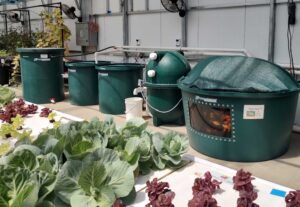 plants. The plants act as a natural filter, cleaning the water for the fish, while the fish provide all the nutrients the plants need to grow. It is a win-win that allows you to grow fresh kale, lettuce, and herbs alongside your protein. Most of our clients quickly realize that adding a Growasis DWC (Deep Water Culture) trough is the most logical next step for true food independence and a more beautiful and productive backyard food production system.
Common Challenges of Backyard Fish Farming (& How to Avoid Them!)
The Dangers of Overstocking
It’s tempting to put 100 fish in a 100-gallon tank to maximize your harvest, but this is a recipe for disaster. Overstocking leads to oxygen crashes and stressed fish that are susceptible to disease. A good rule of thumb is to start with a lighter stocking density around 1 fish to every 5 gallons of water. This will allow your fish to experience better water quality and you will have a much greater chance of success.
Managing the Nitrogen Cycle
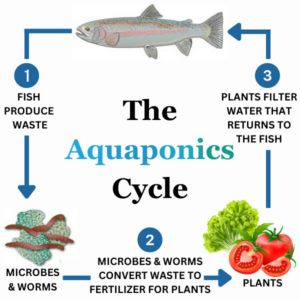
You cannot simply fill a tank wit
h tap water and add fish immediately. You must cycle your tank to build up colonies of beneficial bacteria that convert toxic ammonia into safer nitrates. Using our aquaponics getting started guide and our AquaCycle Cycling Kits can help you navigate this invisible but vital chemical process.
Monitoring Water Chemistry
pH, Ammonia, Temperature and Nitrite levels are the pulse of your farm. You don’t need to be a chemist, but you do need to be observant. Investing in a simple water testing kit and checking it weekly can prevent a majority of fish health issues. If you keep the water happy, the fish will take care of the rest.
Why Choose The Aquaponic Source for Your At-Home Fish Farm?
We don’t just sell parts; we provide a pathway to success. Having started our journey at The Growhaus in Denver, we’ve built everything from urban farms in the US to custom greenhouse extensions for luxury estates in Seattle or even a local restaurant in the Colorado mountains. We understand that every space is different, which is why we don’t believe in one size fits all.
Our pride lies in our ability to design for the space you actually have. Whether you are a retiree looking for a meaningful new hobby, a teacher looking to inspire a classroom, or a high-end homeowner wanting a status-worthy garden, we provide the engineered reliability that DIY projects lack. Our systems come with comprehensive operation manuals and are backed by world-class aquaponics courses and customer service to ensure you feel like an expert from your very first harvest.
Start Your Journey Toward Food Independence
Ready to take control of your food supply? Whether you’re looking to start small with a Flourish Fish Farm or you’re ready to dive into a complete Aquabundance system, the best time to start is now.
You can explore our full range of turnkey systems in our online shop, or if you’re looking for something tailored specifically to your home or school, reach out to our design team for a custom quote. For those who want to get their hands dirty and learn the science first, we invite you to join us for an immersion course where we pull back the curtain on everything we’ve learned over the last decade in the industry. Let’s build something sustainable together.