Aquaponic Farm on the Campus: Thomas Ford High School
Educational Aquaponic Farm for Year-Round Food and Education in Reading, PA
School Greenhouse Facility
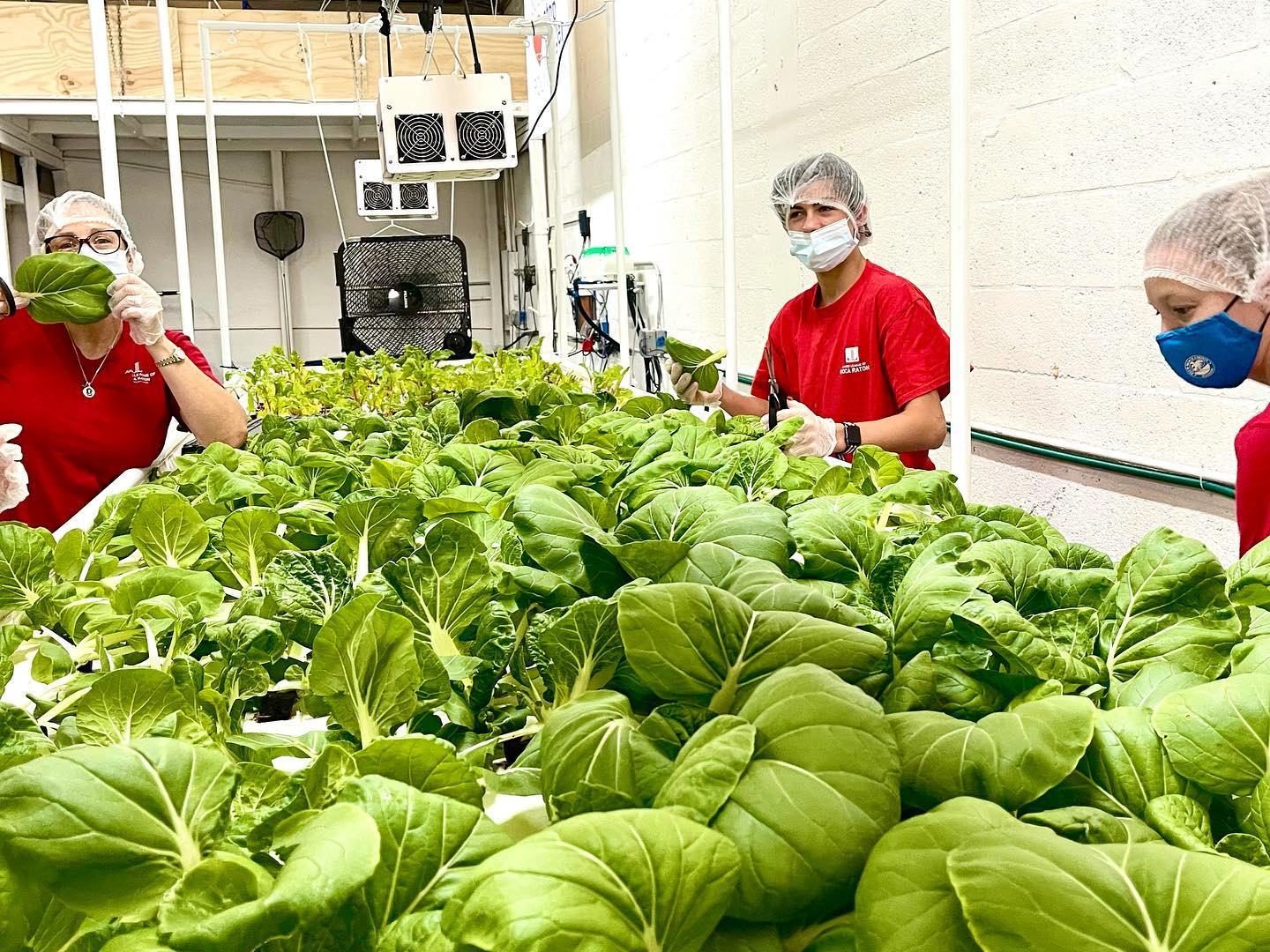
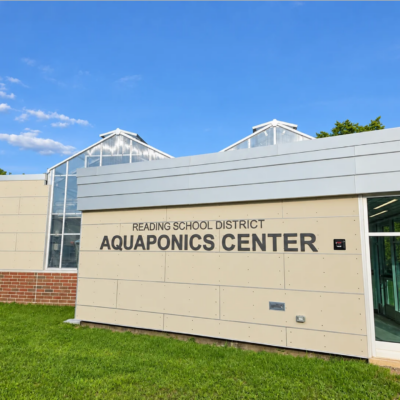
Reading School District is bringing hands-on agriculture to life with a custom designed aquaponic farm designed to connect students with science, sustainability, and food production. This school aquaponics system gives students the opportunity to learn how fish, plants, water quality, biology, and agricultural technology work together in a living ecosystem. By incorporating aquaponics into STEM education, the Reading School District Aquaponics Center demonstrates how aquaponics in schools can transform the classroom into a working farm and prepare students for the future of agriculture.
The Building: Dedicated greenhouse facility with headhouse
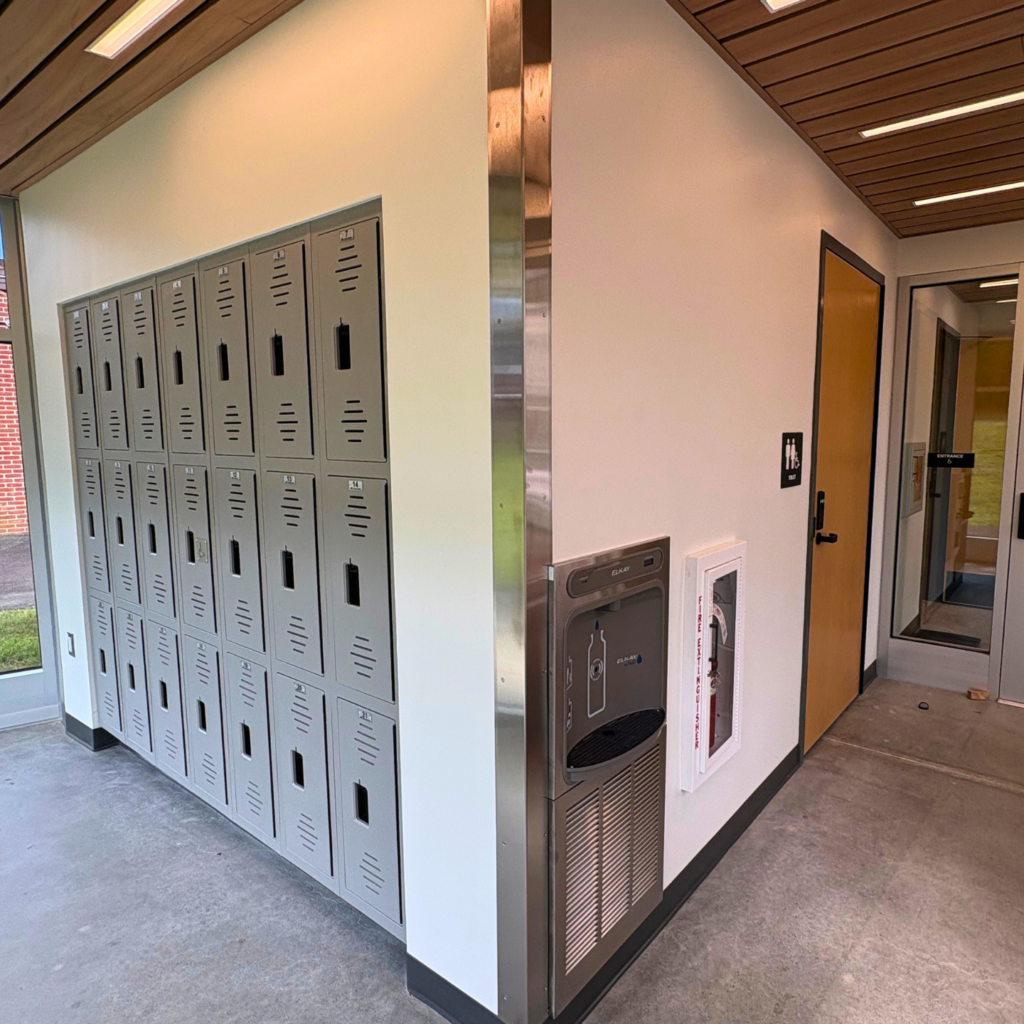
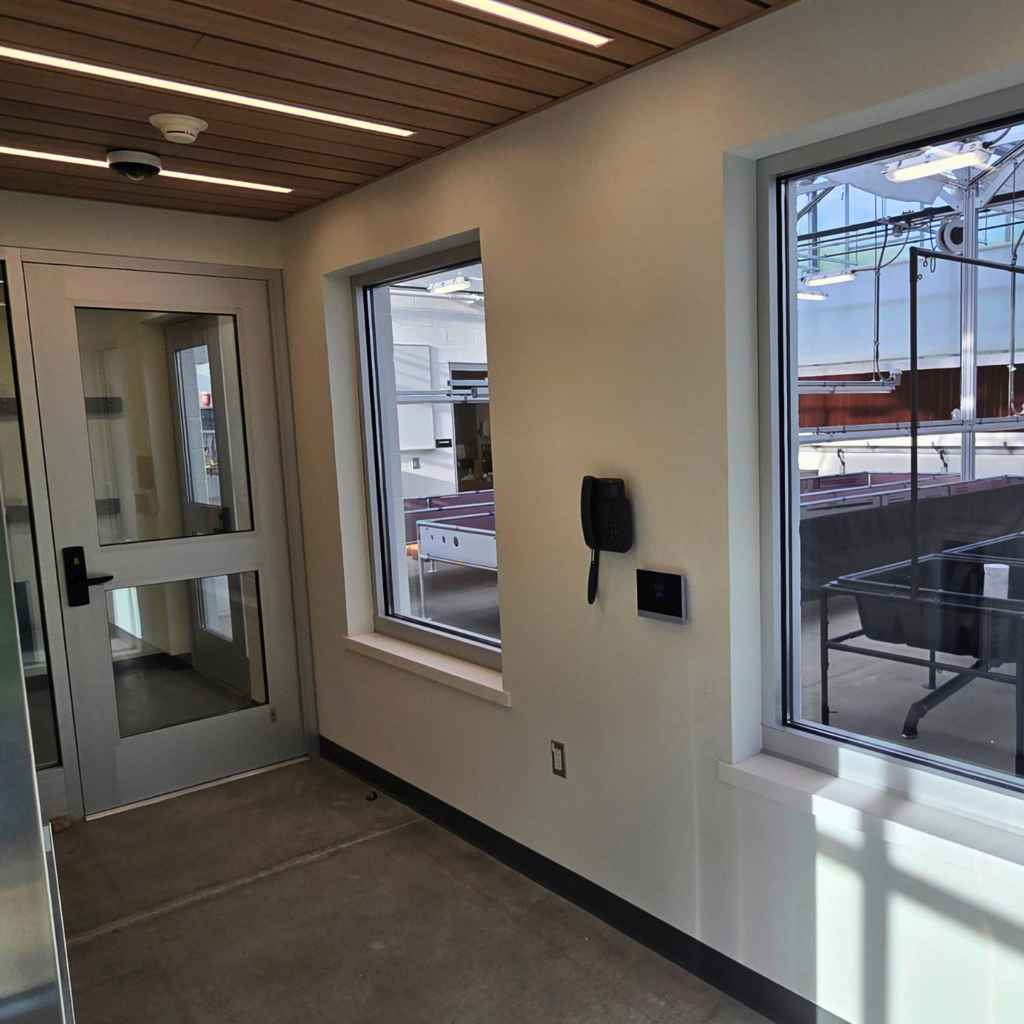
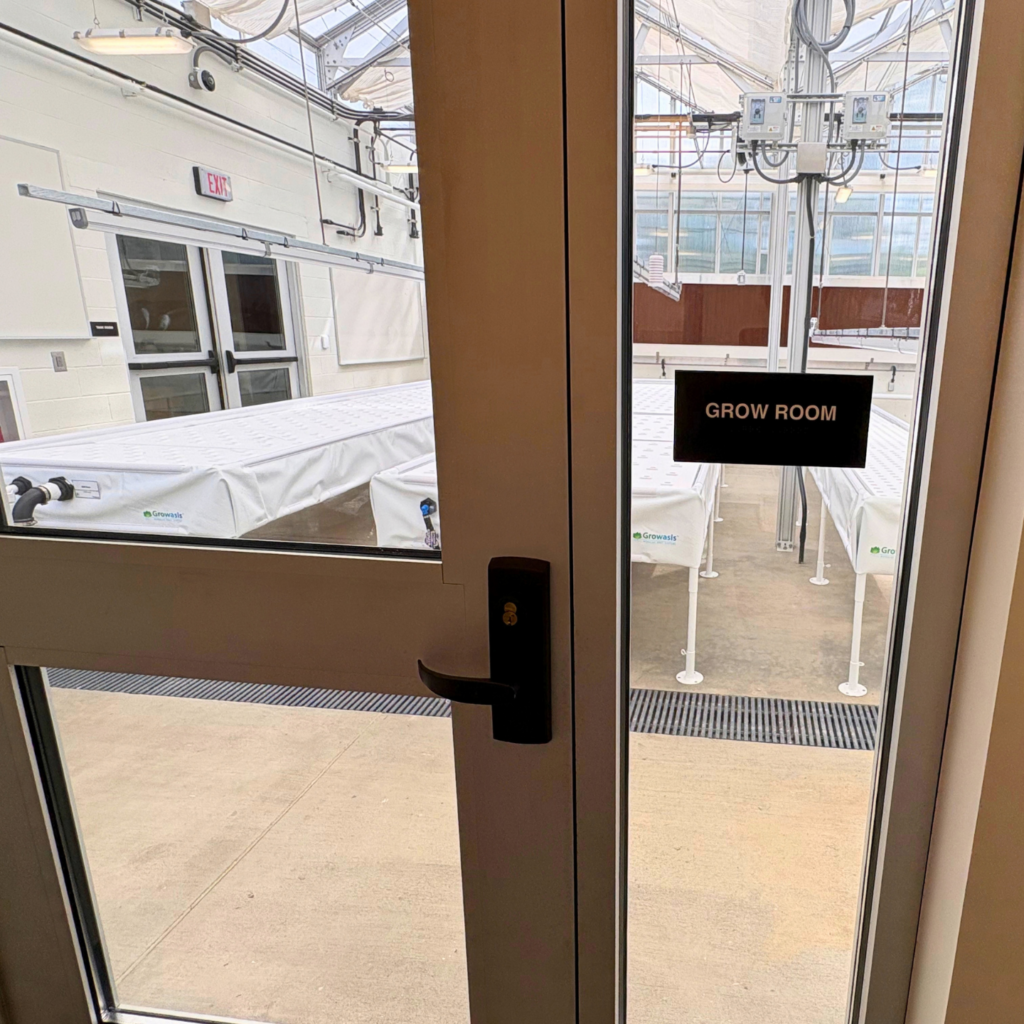
A dedicated stand-alone greenhouse was built on the school property that features a hallway entrance where students can store their bags and supplies in lockers. Drinking water and bathrooms are both included in the main foyer. This entrance allows for more bio-secure entry procedures and helps keep the growing rooms clean and safe from debris.
The Plants: Deep Water Culture, Media Beds, Soil, Germination
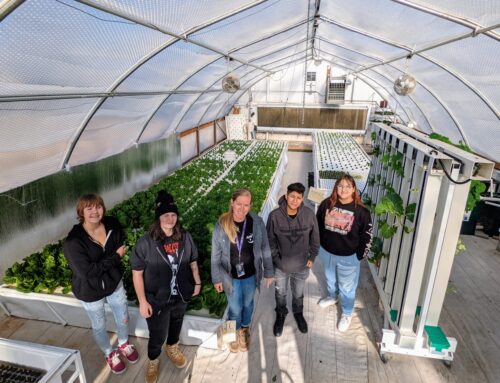
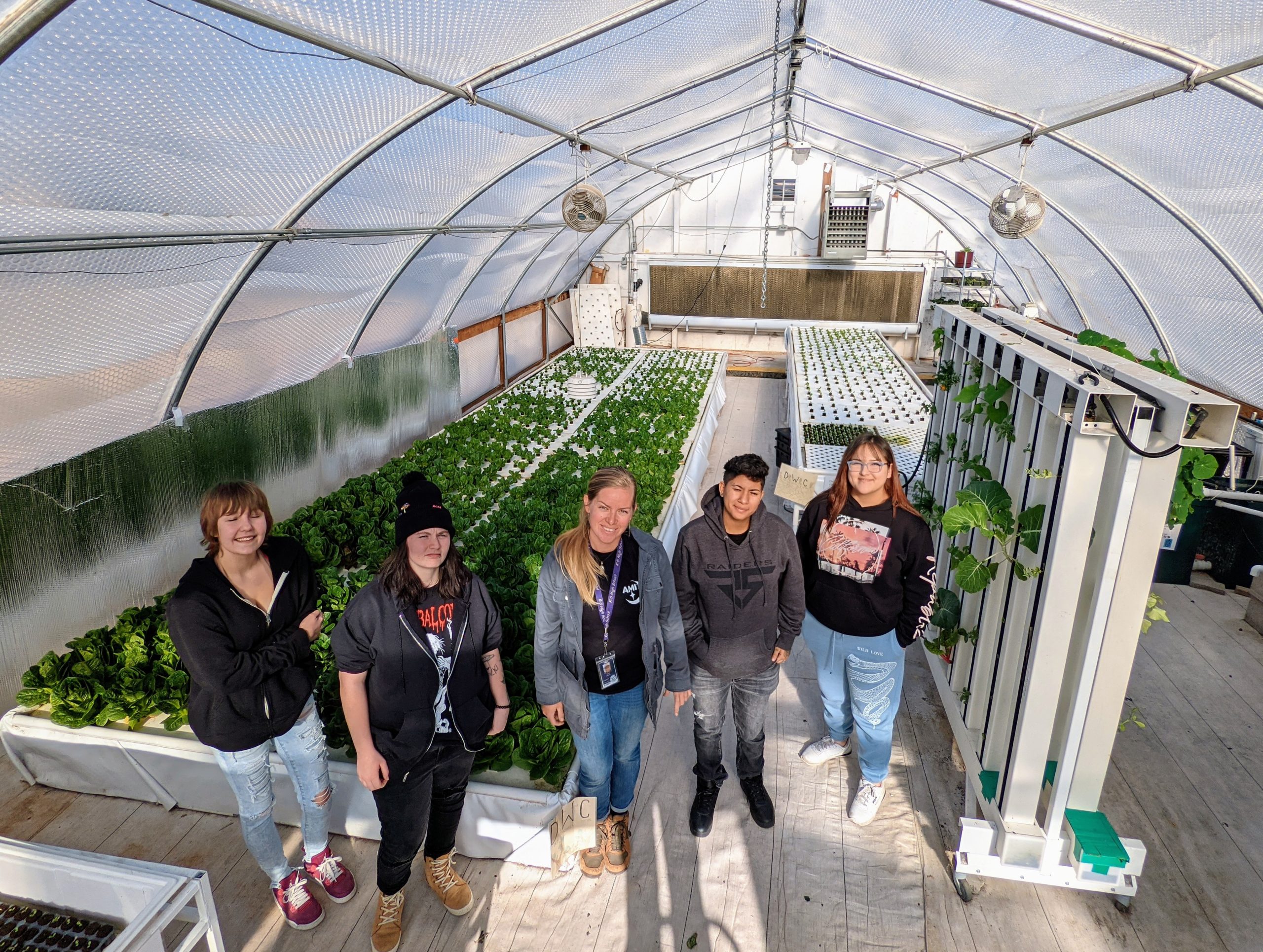
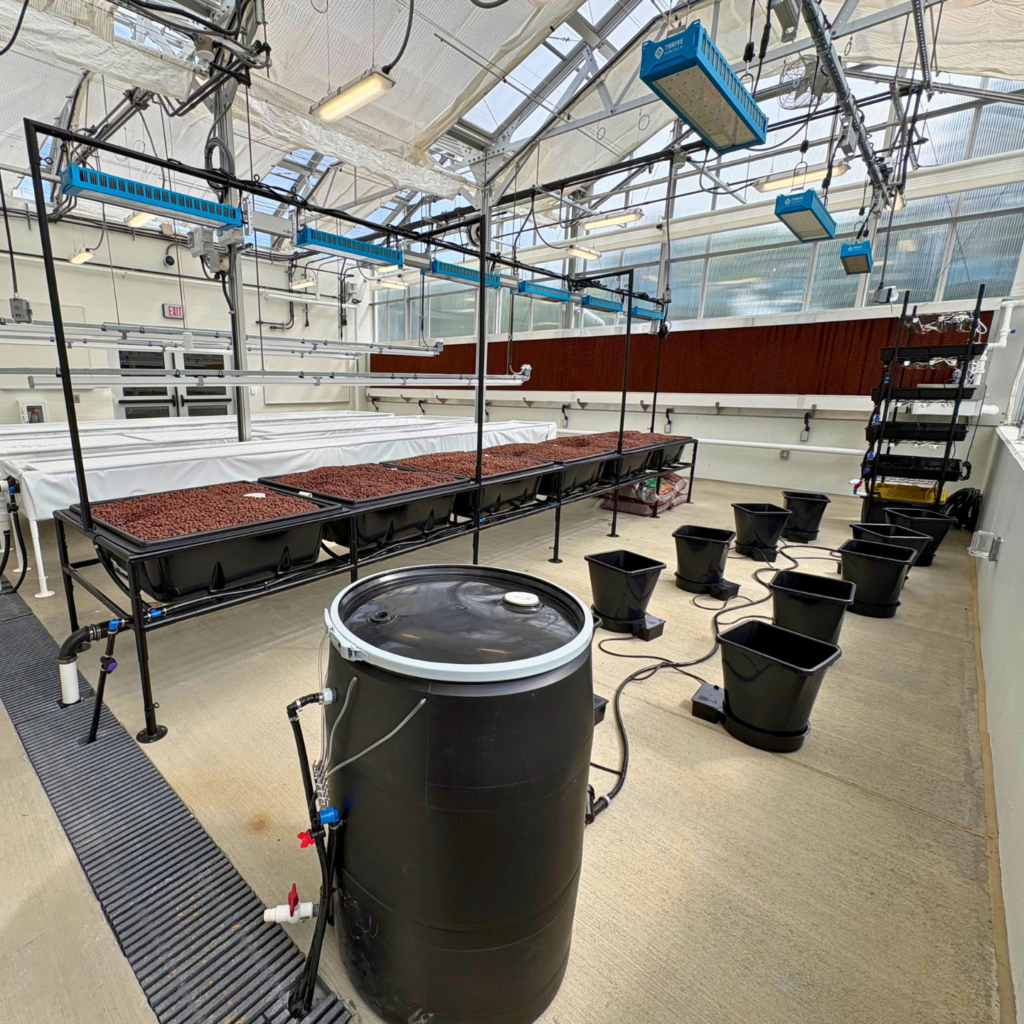
Food production is not the goal. Education is the primary focus. We installed six AquaBundance media beds where shorter vining and rooting vegetables will grow within waist-high and easy-to-reach frames. We added a vertical rack on the frame that doubles as a light and trellissing rack. Each grow bed has a dedicated 300w Pinnacle LP grow light to supplement light during the winter and the fall.
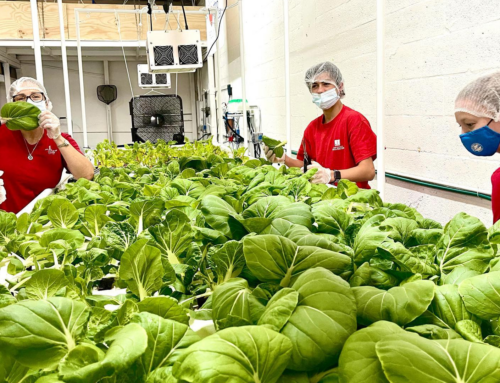
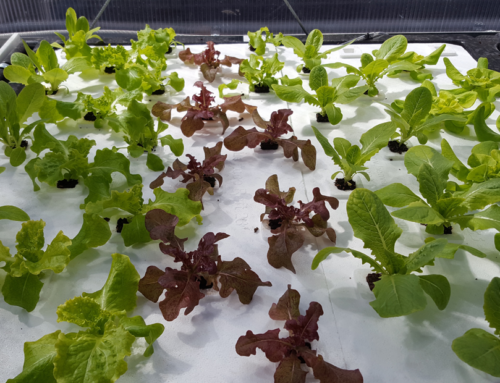
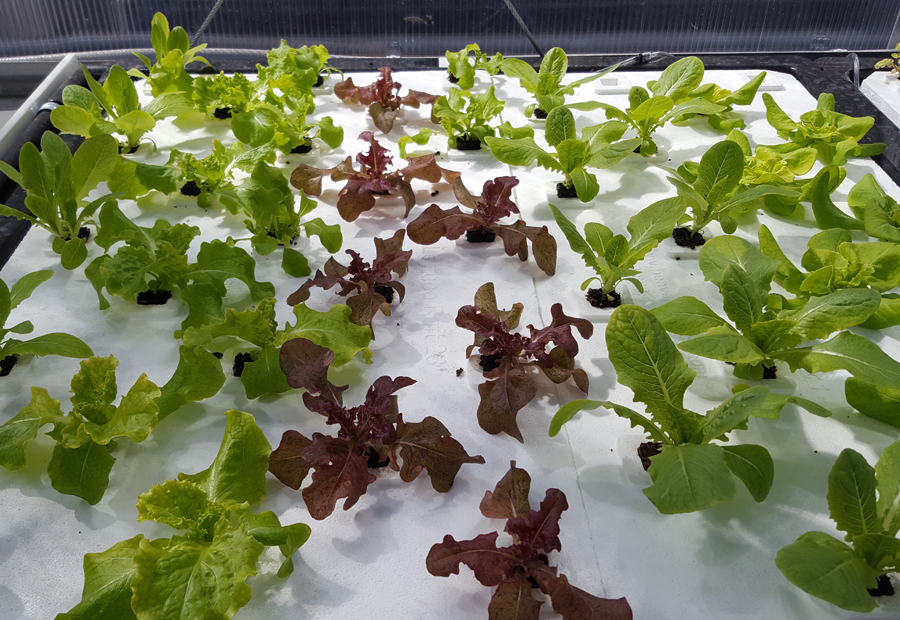
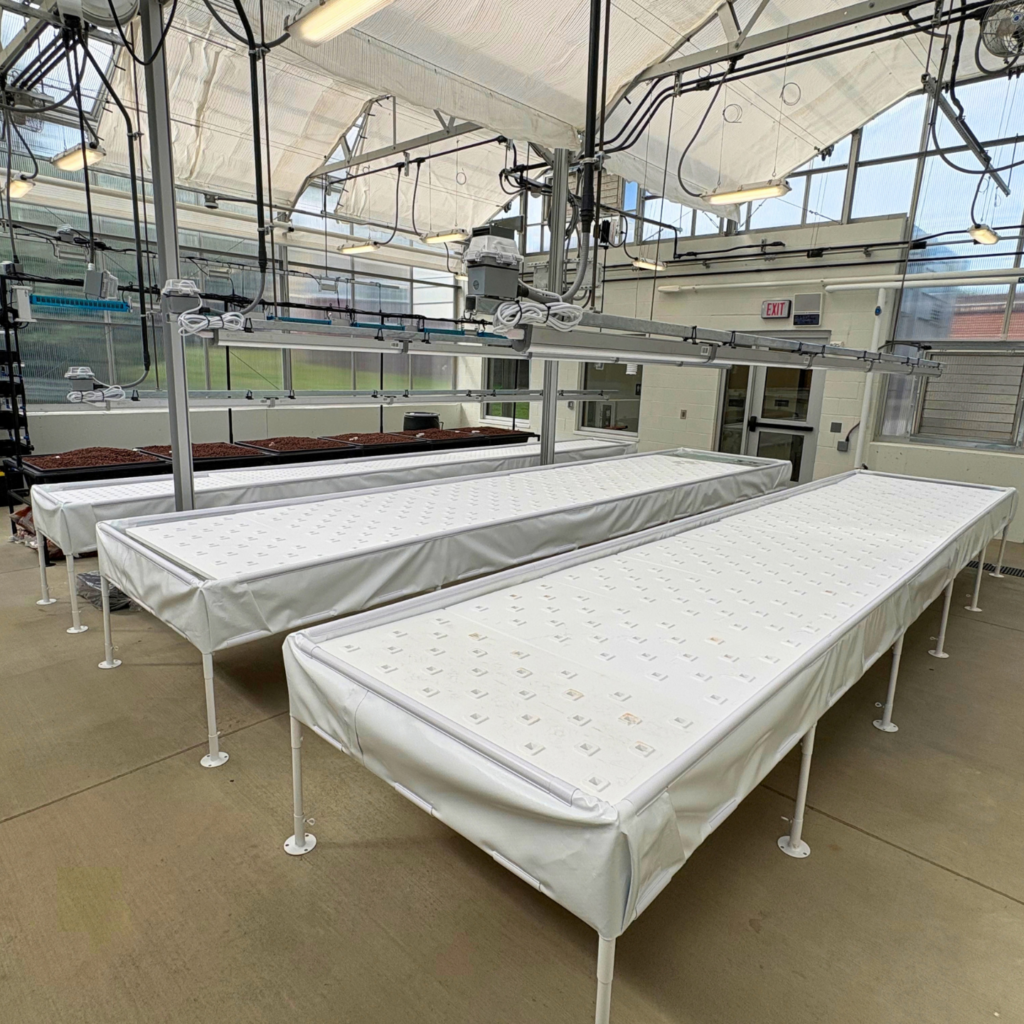
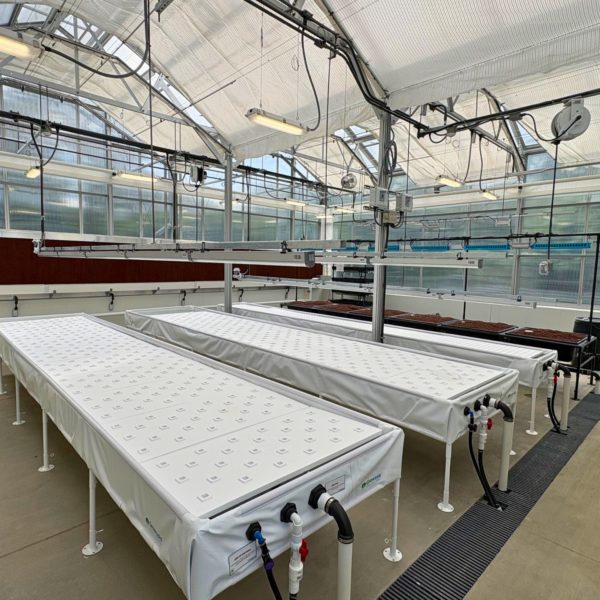
Their leafy green production will take place within one of (3) Elevated Growasis Raft Systems. The smaller raft bed is 2′ wide and will house freshly transplanted seedlings before moving into one of the two wider Growasis troughs. Each trough is supported by 120W full-spectrum LED lighting fixtures from Thrive Agritech.
The (10) AutoPot Bucket System is designed as a one-way plumbing configuration that irrigates the soil with filtered aquaponic water. The buckets are designed with automatic top-off valves for hands-off watering.
The nursery and microgreen system is fully automated with timed LED lighting, pumps, and timers included as standard. The nursery has the capacity to maintain a consistent seeding schedule for the DWC production as well as produce high-value specialty microgreens.
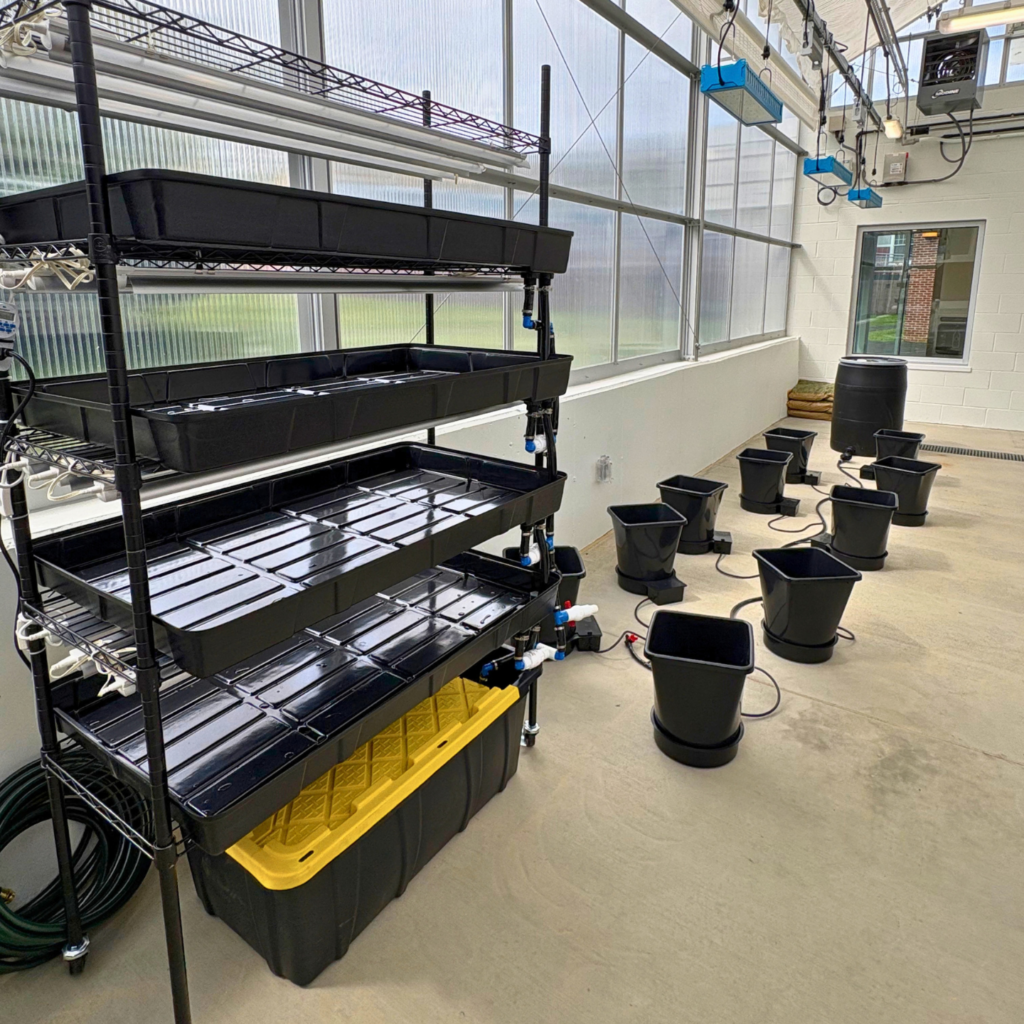
(3) Floating Raft Beds (DWCs)
- (2) 4’x 20′ Growasis DWCs
- (1) 2′ x 20′ Transplant DWC
- 728 growout planting spaces
Media Beds & Soil Pots
- 144 sq/ft growing space
- 64 plants at a time
- 14,130 lbs of tomatoes per season
Nursery & Microgreens
- (189) 10”x20” microgreen trays
- 150-flat microgreen capacity
- 3,900 microgreen flats annually
128-160 weekly heads of lettuce
608-1,058 lbs tomatoes annually
312 microgreen flats harvested annually
The Fish: Tanks, Filtration, UV
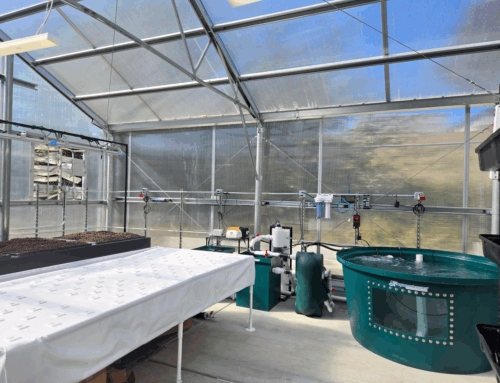
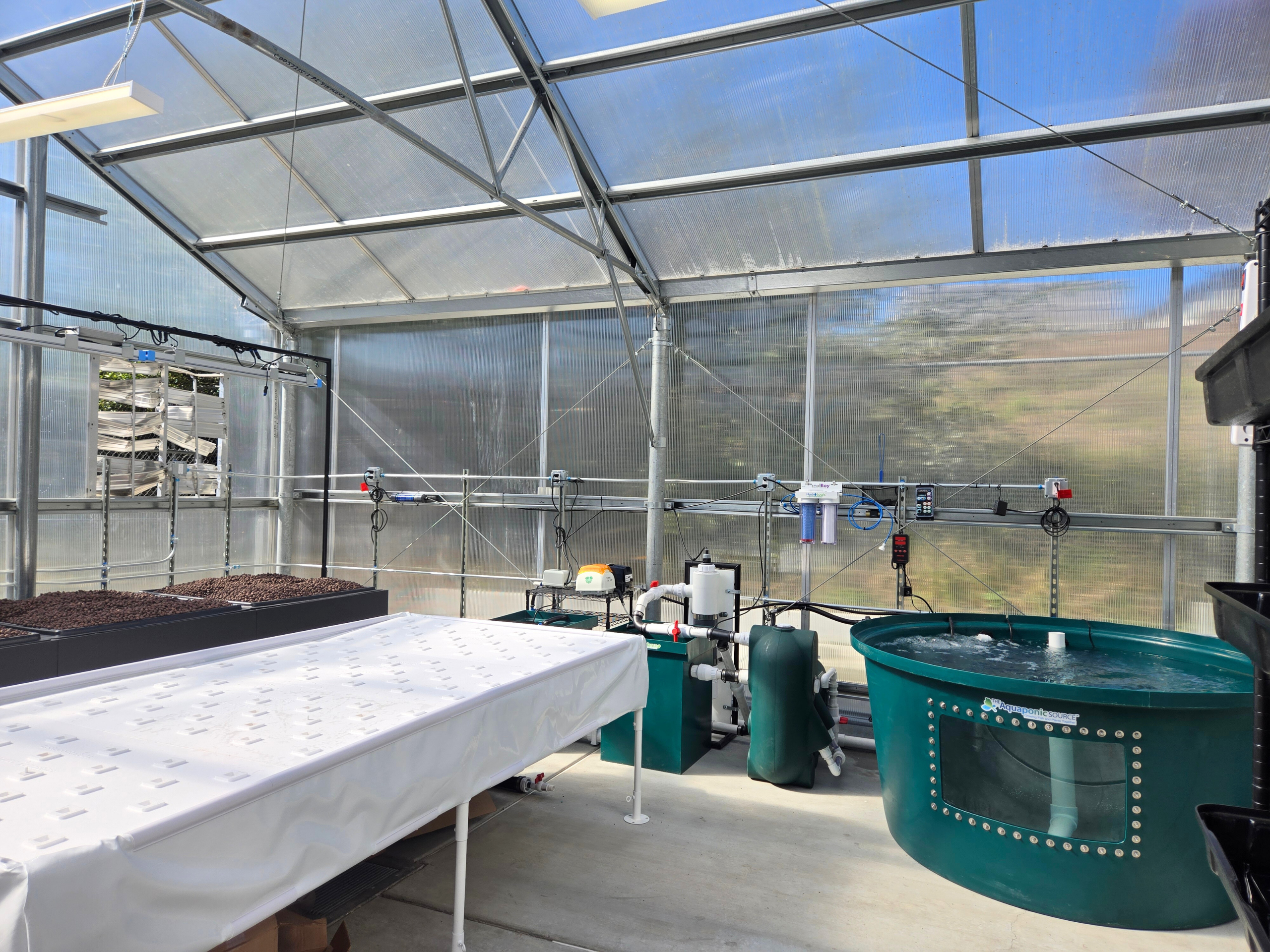
The equipment for the fish system is located in a separate room of the greenhouse called a headhouse. This allows for variable environmental controls that manipulate the different prefered conditions for fish and plants. The farm managers will be able to control the environment in one room without affecting the environment in the other room.
To handle the amount of nutriens required by the plants, we installed two 300-gallon fish tanks complete with viewing windows and independent controls. The soild waste from the fish will pass through an Endurance 4000 bead filter, where the solids are removed from the water column. That solids-free water will then travel in two directions: towards the fish and towards the plants.
We also installed a UV sterilizer which is a natural, safe, and effective method for removing waterborne pathogens from your water supply that doesn’t leave any residual chemicals in the water. It will also help reduce or eliminate algae growth from the water.
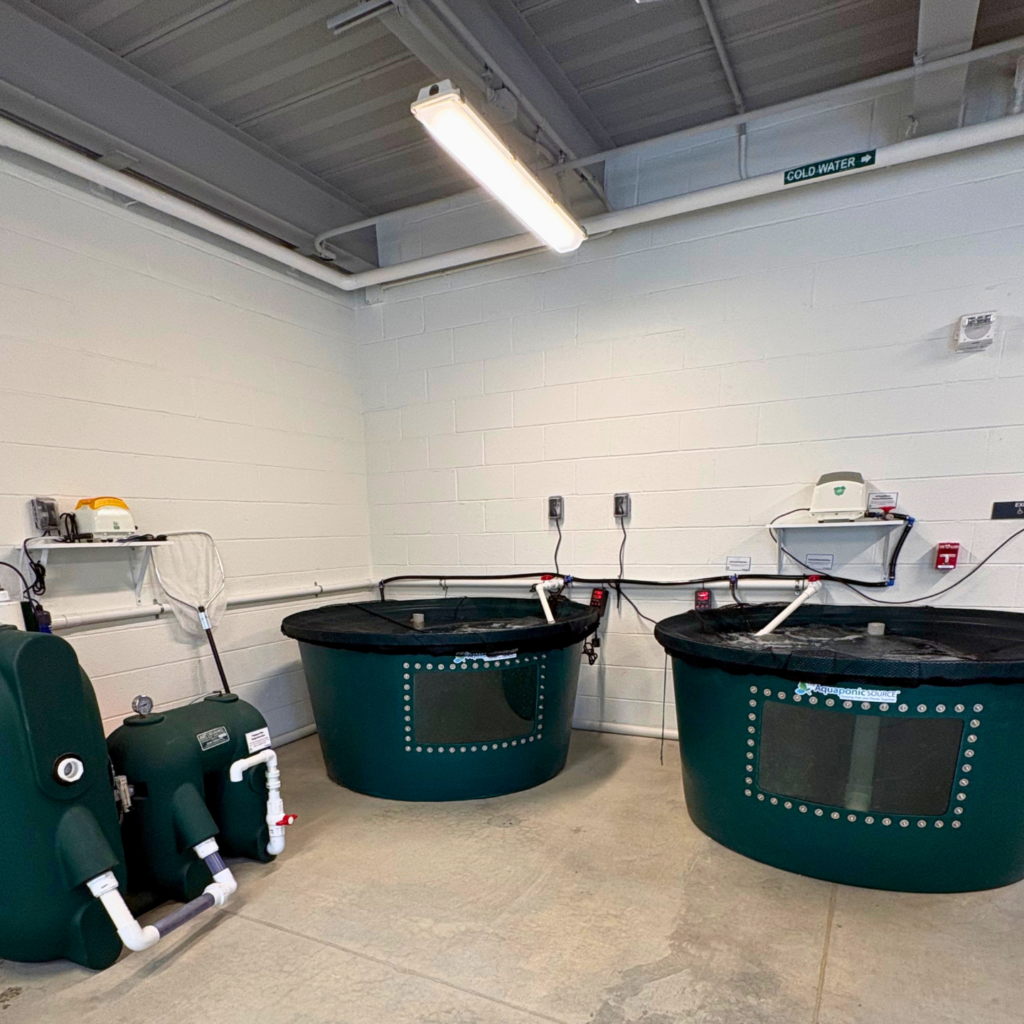
(2) 300-gallon Fish Tanks
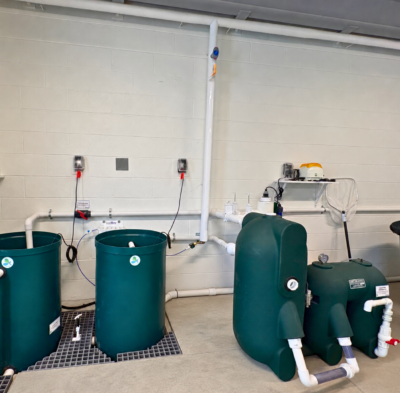
Bead Filtration
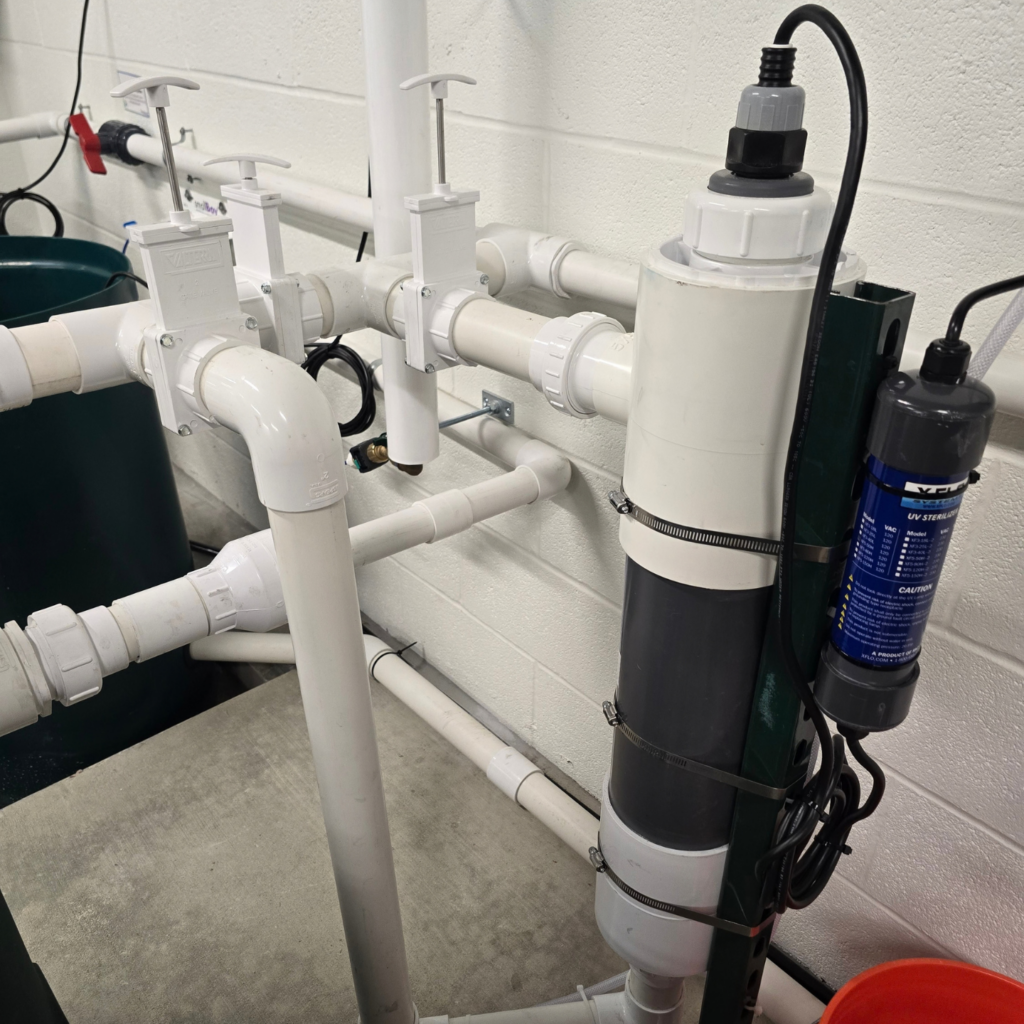
UV Sterilization
100 Fish per Tank
285 lbs Harvested Annually
200 Total in System
Education Matters
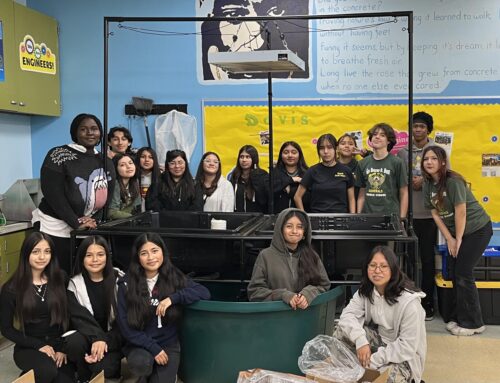
The Reading School District Aquaponics Center shows another example of how aquaponics can transform agriculture into an engaging, hands-on educational experience. By combining aquaponics, STEM learning, and sustainable agriculture, students can develop practical skills while gaining a deeper understanding of modern food production. Projects like this give schools a powerful way to introduce students to careers in agriculture, science, engineering, and environmental sustainability. School aquaponics farms are helping prepare the next generation to grow food more efficiently, responsibly, and sustainably.