Residential Greenhouse
Conifer, CO
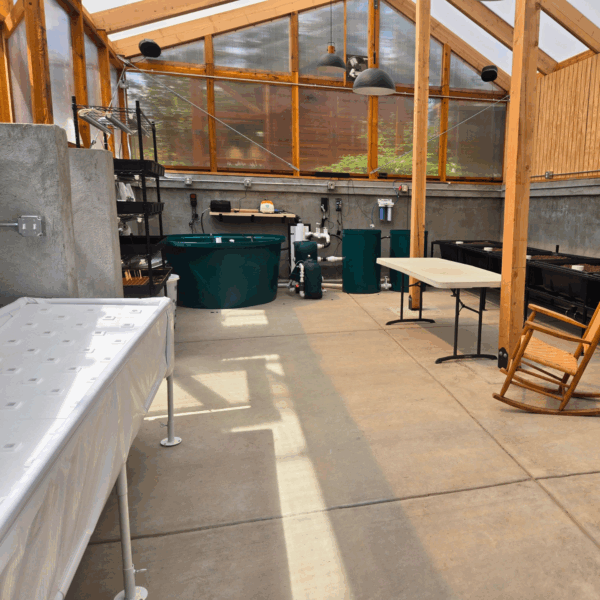
With a wood frame 30′ x 18′ self-constructed greenhouse, this private residence in Conifer, CO wanted to grow food year round. When the fruitful growing months of summer pass, most permaculture enthusiasts are left waiting months for the next growing season to arrive. But why should home grown fruits and greens be furloughed through the fall, winter, and most of the spring? What if a residence could grow their own food their own way regardless of outdoor conditions? What if gardening could be a year-long bounty?
The Aquaponic System
The Fish
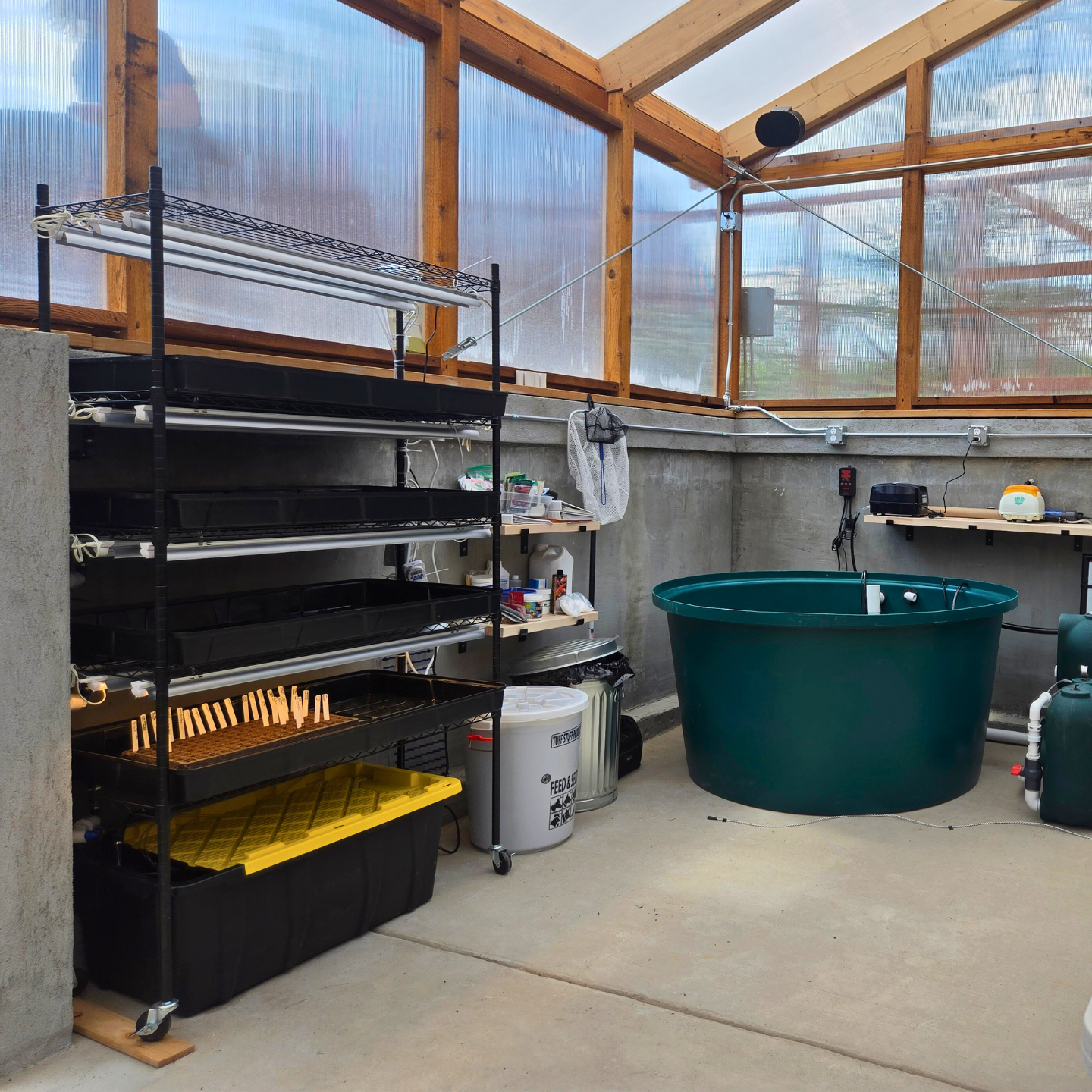
A 300 gallon fish tank was used to accommodate both harvest and production stocking density requirements. With the 300 gallon tank, the growers can harvest a certain number of fish without decreasing nutrient production from the remaining fish. For their stocking variety, the growers are comingling perch and catfish.
Because they’re growing inside a greenhouse with ample summer sunlight, we connected a UV sterilizer to the bead filter for post-solids filtration of algae and harmful water-based pathogens.
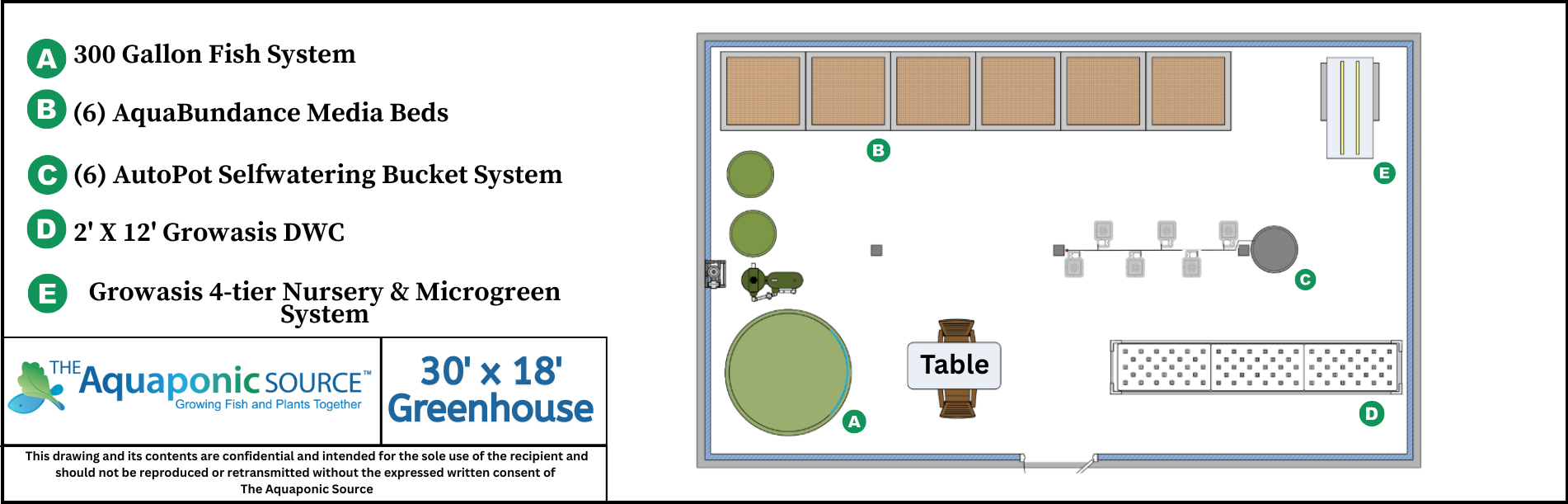
(A) 300 Gallon Fish System
- 300 gallon AquaBudance Fish Farm
- Coupled or decoupled fish and plant sump
- Endurance 2000 Bead Filter
- Tilapia, catfish, koi, bluegill, perch & more
(A) Fish System Upgrades
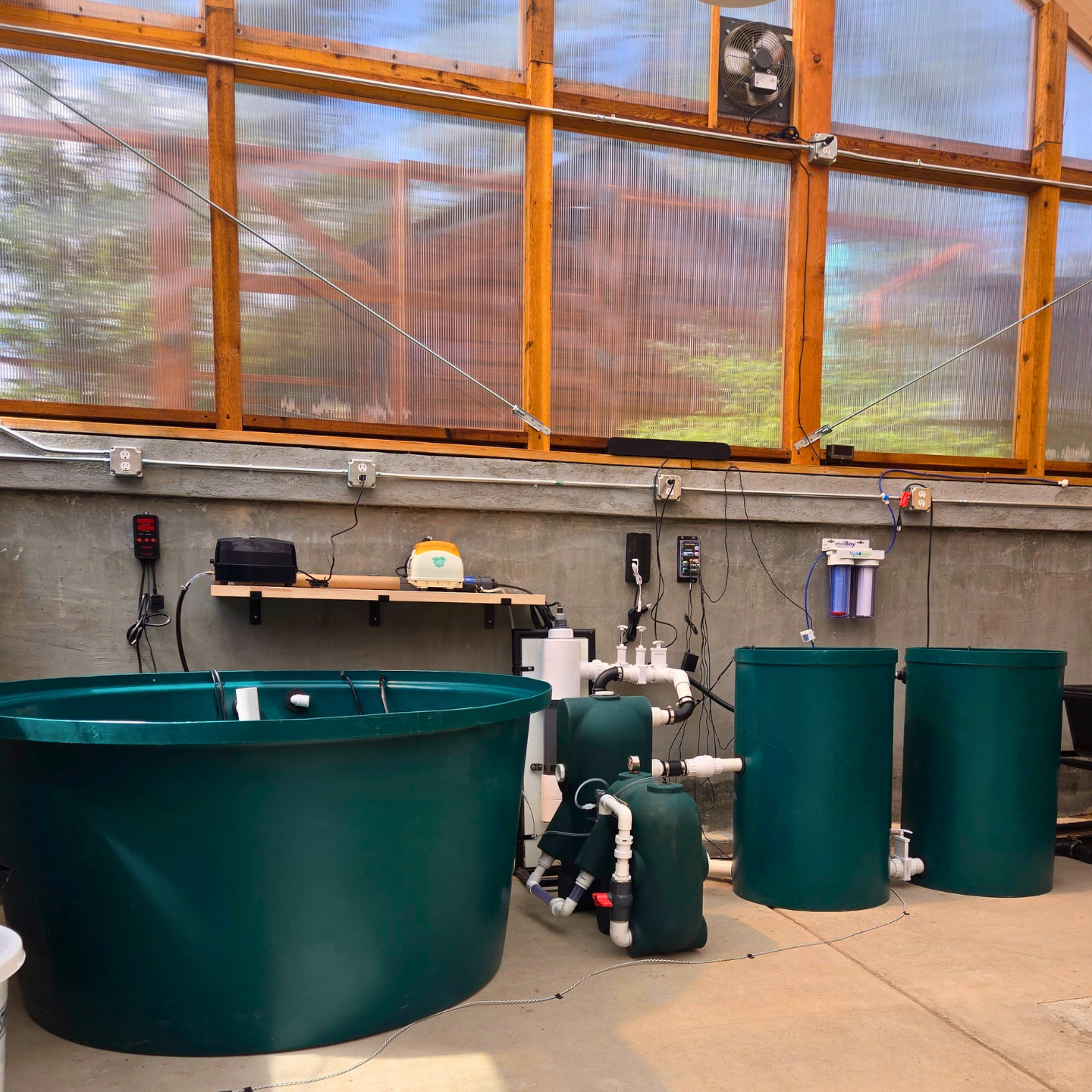
AquaBundance Fish Farm

Bead Filter & UV Sterilization

Coupled & Decoupled Sumps
100 Perch, 45 lbs total
0.15lbs per Gallon Stocking Density
0.7 lbs daily feed
The Plants
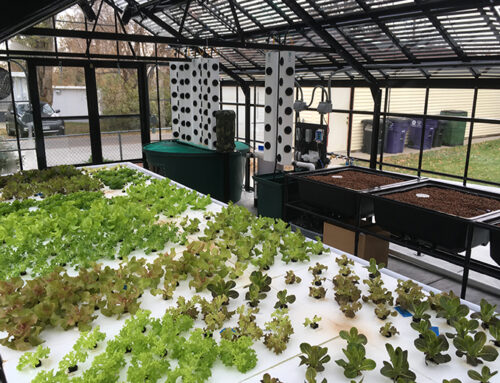
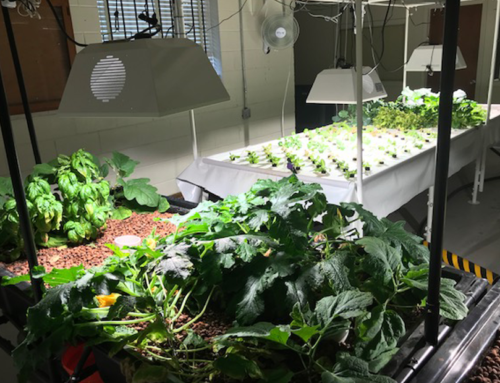
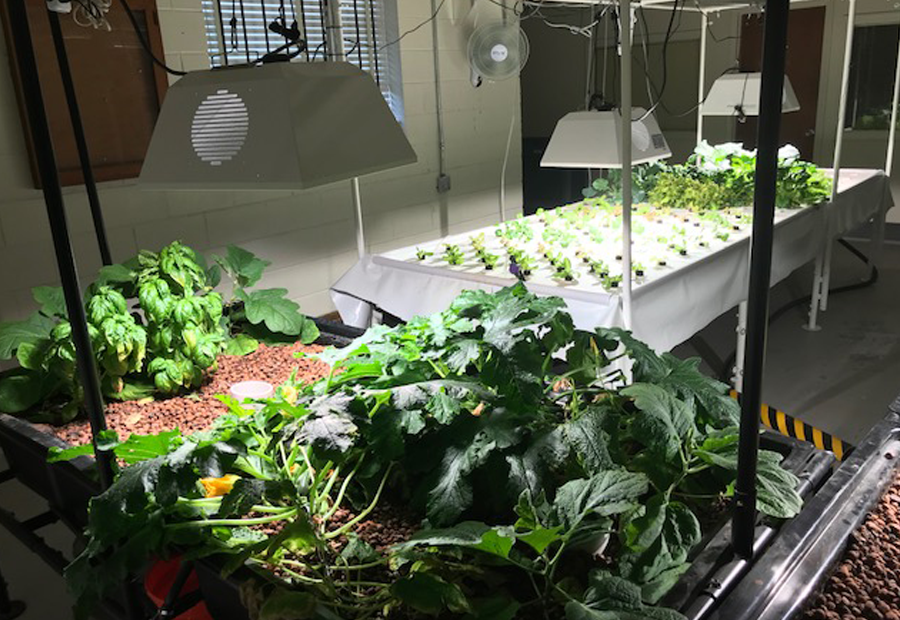
The family was interested in growing a dense crop variety, so we designed a system layout for them that accommodated three growing methods. Starting with six AquaBundance media beds, shorter vining and rooting crops will thrive within their waist-high frames. The media beds offer crops a strong foundation and adequate root resistance for crops such as beets, radishes, celery, eggplants, tomatoes, peppers, strawberries, and many others.
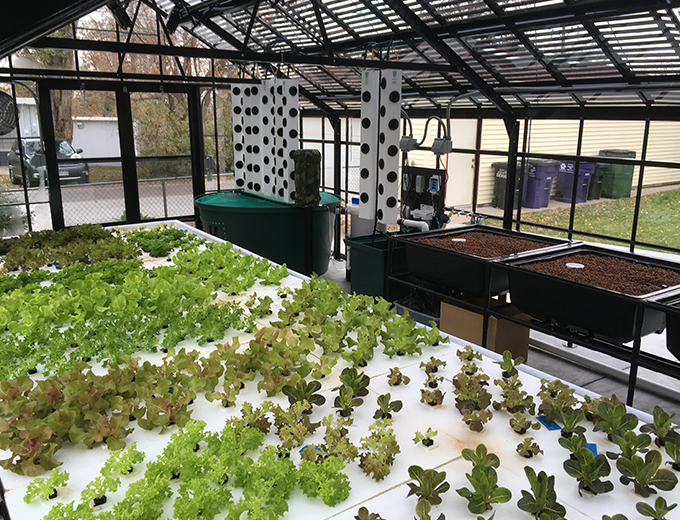
Their leafy green production will take place within a 2′ x 12′ Growasis Elevated Raft System. Floating raft boards inside this assembly line-like trough act as a conveyor belt with sprouts being transplanted on one end and the harvest occurring at the other. Another waist high frame for easy gardening.
Lastly, six AutoPot Self-watering Buckets were added and plumbed into the main aquaponic system. With a dedicated nutrient reservoir and a top off valve, the self-watering buckets only take up the exact amount of water they need without requiring hands-on intervention.
(6) Media Beds
- 54 sq/ft growing space
- 4 tomato plants per bed
- 25lbs tomatoes per plant, 600lbs annually
2′ x 12′ Growasis DWC
- 24 sq/ft growing space
- 84 planting spaces
- 11 lettuce heads weekly
(6) AutoPot Self-watering Buckets
- 6.6 gallon bucket
- 25lbs per plant
- 270lbs tomatoes annually

(6) Media Beds
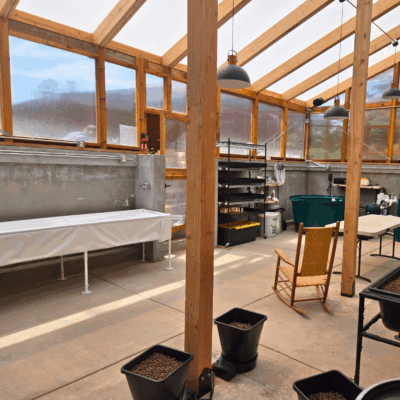
Growasis DWC & AutoPots
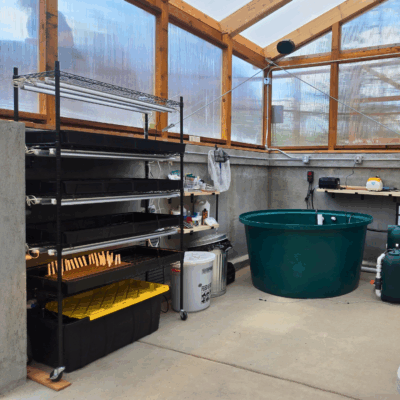
Growasis 4-tier Nursery
870 lbs per season
582 Lettuce Heads Annually

200 lbs per season
Equipment
No two farms are ever alike. We provide several options for our farmers so that each farm has the equipment and resources available to succeed from start up to harvest.
First up is the SmallBoy Source Water Filter. This filter reduces up to 99% chlorine, sediment, rust, silt, volatile organic compounds (VOCs), mercury, lead, and PCBs (organic chlorine), keeping beneficial bacteria and microorganisms alive and healthy. In this aquaponic system, the SmallBoy filter is connected to a float valve inside the sump tank for automatic water top-off to replenish natural water loss.
One Growasis 4-tier Nursery and Microgreen System will be home to germinating seedlings and microgreens. Depending on environmental factors, seedlings will germinate on average for about 10-14 days before they’re transplant ready.
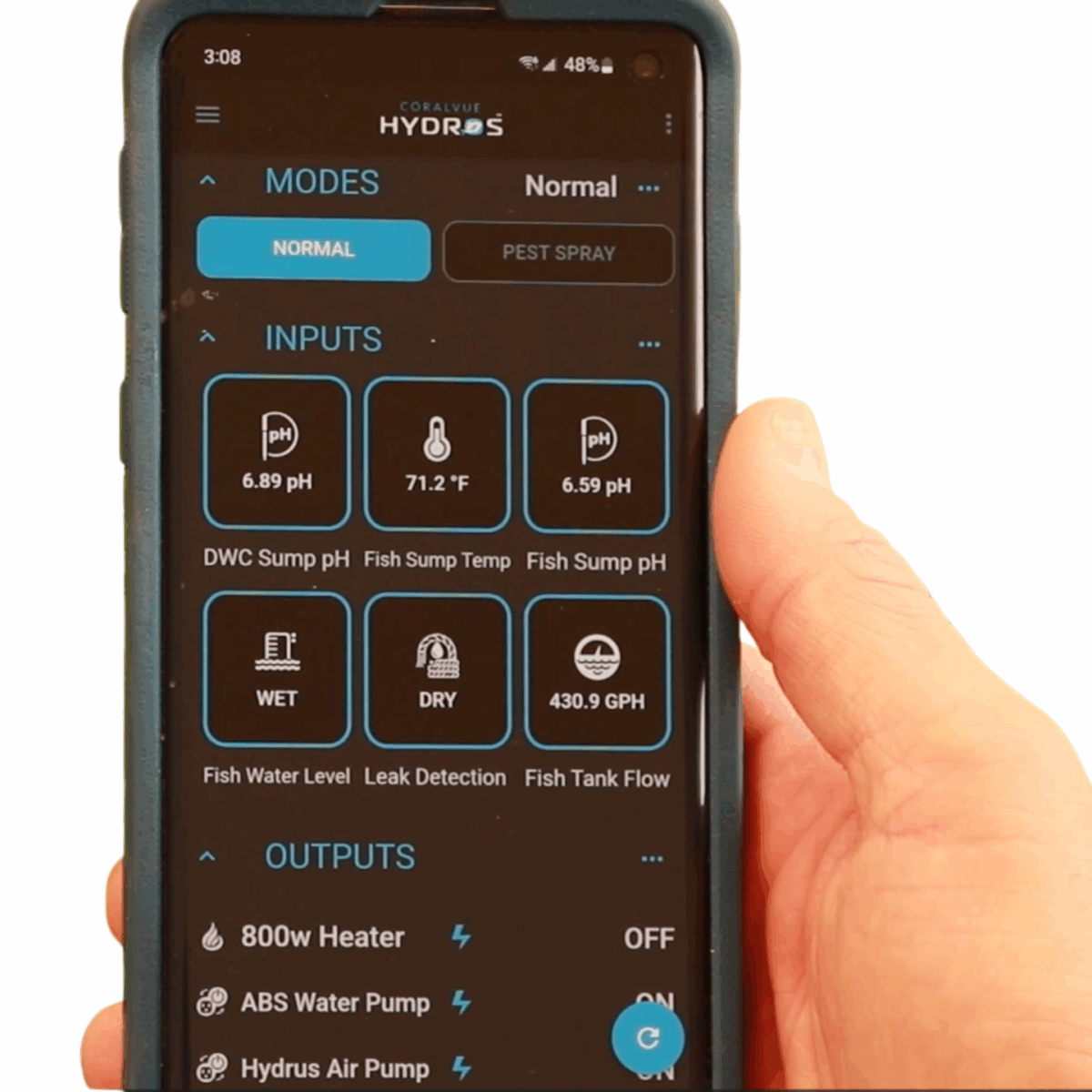
Monitoring is critical for peace of mind when you’re away from the farm. The wifi-enabled HYDROS monitor was installed with various probes and sensors to track pH levels in both the fish and plant sump, water temperature, flow rate, leak detection, and water level.
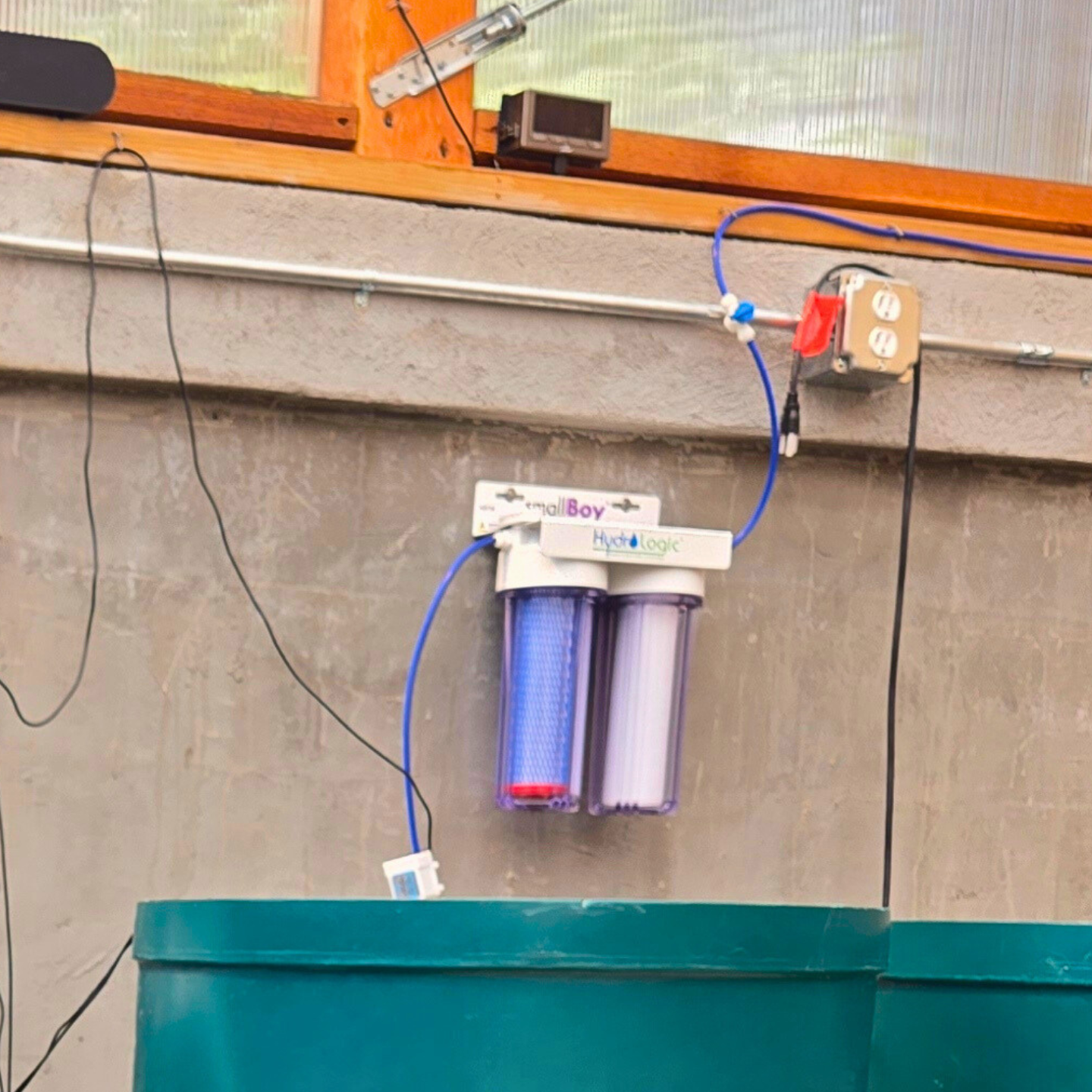
SmallBoy Source Water Filter
Nursery & Microgreens